A Simple Routine for Keeping Credit Paperwork in Order
A modest filing habit can make statements and account correspondence easier to find when a question comes up, without turning paperwork into a household tracking project.
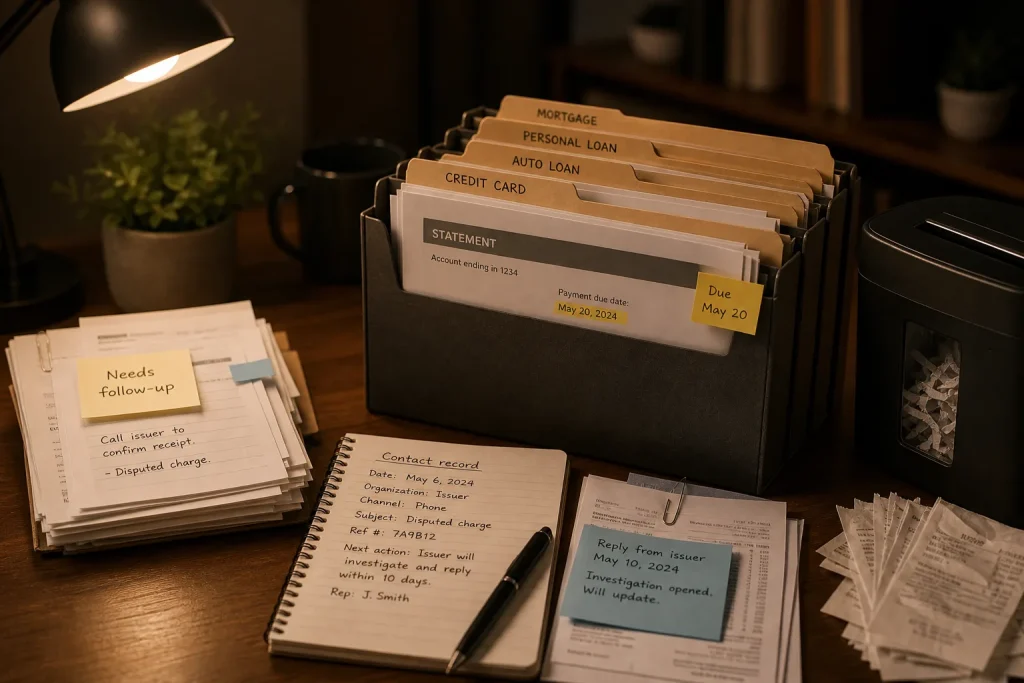
A notice about a payment date arrives while you are sorting the mail, and by evening it has disappeared beneath grocery receipts. A small routine can prevent that familiar scramble. The purpose is narrower than managing a household calendar: keep current account documents together, preserve a clear record of lender or credit bureau contact, and make open paperwork questions easy to spot.
Keep current account documents in one secure place
Choose one home for paperwork you may need soon: a labeled folder in a desk drawer, a file box, or a secure digital folder. Keep it apart from general household mail so an account statement does not get mixed in with appliance manuals or grocery receipts. A paper folder labeled “Credit accounts” or a digital folder protected by a strong password is enough to begin.
Use the same location consistently. Avoid scattering current statements among an email inbox, a downloads folder, and a stack on the counter. Store only records that are useful to you, protect documents containing account details, and shred unneeded paper with sensitive information rather than placing it in ordinary recycling.
Group records by account
Make a section for each lender, card, or other credit account. Use labeled dividers in a paper folder or clear subfolders on a device. A digital file name such as “Card account — statement — month and year” can help you identify a document without exposing a full account number. A familiar account nickname is often enough.
Keep the latest statement and any correspondence about an unresolved question easy to reach. Move older records to an archive section only if you decide they remain useful. Retention needs vary; for questions involving taxes, legal matters, or disputed debt, ask a qualified professional what to keep.
Use the statement itself as the date reference
Instead of creating a separate calendar system, mark the payment due date on the statement or notice that provides it. For a paper document, underline the date or add a removable tab. For a digital statement, use a note or highlight in the file, if your software allows it. Keep the marked statement in the account’s section so the date stays attached to its source.
If a lender sends a revised schedule, keep the new notice with the account and mark the updated date there. Remove or cross out an obsolete date on an older working copy so it is not mistaken for current information. A marked statement is a reference, not confirmation that payment has been made. Confirm uncertain dates or payment status through the lender’s official account channel.
Make a factual record of important contact
When you write or speak with a lender, servicer, or credit bureau about an account, note the date, organization, channel, general subject, and what you were told would happen next. Add a reference number if one is provided. For a phone call, include the representative’s name if available; an unavailable name is no reason to skip the note.
A notebook page or short document works. Keep the record concise and factual rather than trying to recreate a full conversation. Save a copy of any letter you send, along with its sent date and any delivery record you obtain. File replies beside the original message. For a serious dispute or legal question, preserve relevant records and seek qualified advice rather than relying on an informal note alone.
Give unresolved documents a visible place
Create a small “Needs follow-up” section for an unanswered letter, a correction request, or a payment question. Put the latest relevant document there and write the next action on a note attached to it, such as “call issuer to confirm receipt.” When the matter is resolved, move the documents into the account’s regular section and add a brief note describing the outcome.
Do not treat silence as proof that a matter is settled. If a deadline or required response is unclear, check the sender’s instructions and contact the organization through a verified channel. This section is for open paperwork questions, not a general task list.
Review each new account document once
When a statement or account notice arrives, file it under the right account, identify any revised date or account detail, and mark the relevant information on the document. If it concerns an unresolved question, place it in “Needs follow-up”; otherwise, keep it with the account’s current records. A single pass is usually easier to maintain than letting a stack grow and sorting it all later.
If something looks unfamiliar, compare it with information in the lender’s official account channel and ask the lender to explain it. Do not share account credentials in response to an unexpected message. Verify a suspicious communication independently using contact details from a statement or the organization’s official website.
A hypothetical example of tracking a disputed charge
Imagine that Lena has one credit card, receives statements by email, and notices a charge she does not recognize. She saves the statement in a password-protected folder as “Card account — statement — month and year,” leaving the full account number out of the file name. She highlights the due date on the statement and places a copy in “Needs follow-up” with a note to contact the issuer about the unfamiliar charge.
Lena calls the issuer using the number on the statement. She records the date, phone channel, subject, any reference number, and the next action the issuer describes. She saves the issuer’s reply beside the statement. If the issuer explains or resolves the charge, she moves the records into the card’s regular section and adds a note stating what happened. The resulting file shows which document raised the question, what contact took place, and whether the issue remains open. The tradeoff is a little extra handling of the statement, but no separate calendar system. This is an invented hypothetical example, not an actual case.
Keep the paperwork routine modest
A folder, marked statements, and a brief contact record are enough for many people. When new account mail arrives, give each document one clear destination: the account section or the open-question section. Remove duplicates or obsolete working copies when you no longer need them, while keeping any records relevant to an unresolved matter.
If you share responsibility for an account, agree on who may access its documents and how sensitive records will be protected. The useful test is simple: when a question comes up, can you locate the relevant statement and tell whether the paperwork issue is still open? If not, simplify the labels or storage locations rather than adding another system.
Keep exploring
Questions to Ask Before Adding Credit to a Household Plan
Compare three ways to handle a household credit decision: borrow now, wait and prepare, or choose…

Why a Credit Check May Ask You to Confirm Your Identity
An identity prompt can be a routine part of an application, but you should understand who…