How to Read the Main Sections of a Credit Report
A credit report is easier to review when you understand what each section records, how its dates and labels work, and which details call for a closer look.
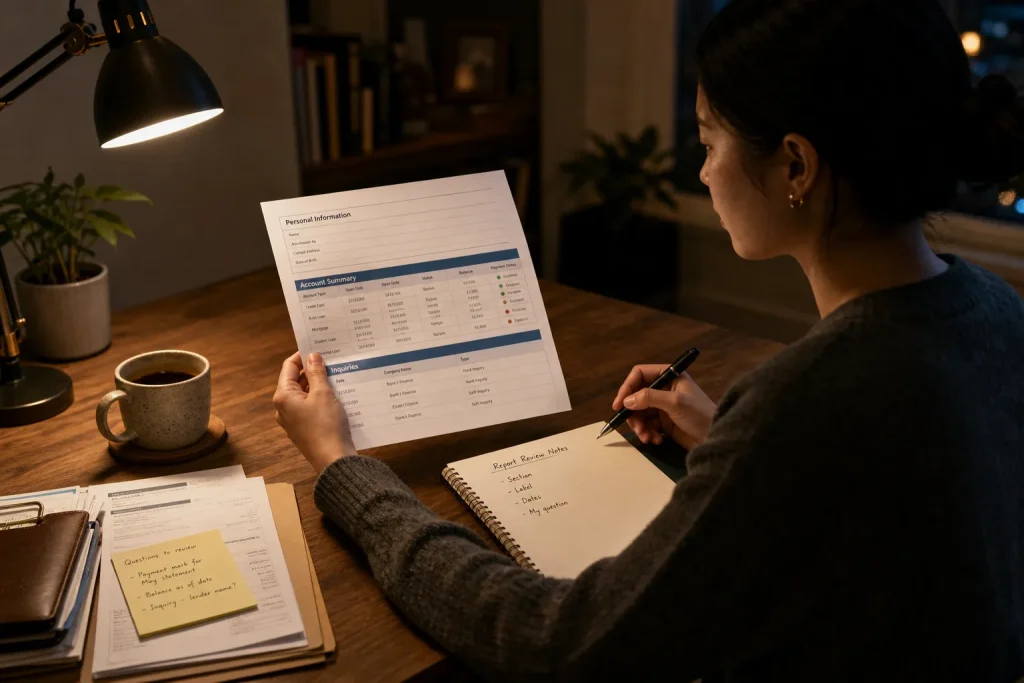
Open a credit report beside a blank sheet of paper and begin with the heading that identifies the report source and date. Those details set the context for everything that follows: reports from different companies can display information differently, and an entry reflects information supplied at a particular time. Reading by section helps you understand what the document records before deciding what merits follow-up.
Reports vary in layout and terminology, but their main sections serve distinct purposes. Personal information helps identify the consumer; account history describes credit accounts; and inquiry records show requests for report information. The aim is to understand each section’s role, then compare relevant entries with your own records where needed.
Identify the report and its coverage
Note which credit reporting company issued the report and when it was prepared. Keep those details with your review notes. A report may not include the same information, or present it in the same way, as one issued by another company. A difference between reports is a reason to compare their coverage, not proof that either one is wrong.
Check whether you have a complete report or a condensed view. A score page, for example, may omit details that appear in the full report. If an account or inquiry is shown only in abbreviated form, find the expanded entry or obtain the full report before interpreting it.
Choose a private, secure way to make notes: a paper copy kept safely, or a protected file. For each entry you want to understand, record the section, its label, relevant dates, and your question. Avoid placing full account numbers or other sensitive details in an unsecured file.
Understand the personal-information section
The opening section may list your name, former names, addresses, and other identifying information. Its purpose is to help associate the report with you; it is not an account history. Read it as context for the records that follow, rather than as a measure of credit activity.
Some variations have straightforward explanations. A former address may remain in the report, and a name may appear in a form supplied by a lender. A detail that does not match your records is worth noting, but its presence alone does not explain why it was included or establish that an account is inaccurate.
If you believe an identifying detail is wrong, check the reporting company’s instructions for correcting personal information. Keep this task separate from interpreting account histories: the company’s process for a personal-detail correction may differ from the process for a disputed account or inquiry.
Read account history as a dated record
Look for a section labeled accounts, credit history, or account information. An entry may identify a lender or service provider, account type, status, payment history, and balance information. Not every report supplies every detail, and labels can vary.
Start by identifying what the entry describes. A lender may appear under a parent company or servicer name rather than the brand you remember. Use the account type and dates to help orient yourself, then compare the entry with statements, loan documents, or account notices you already have.
Read status and payment information in light of its dates. A closed account can remain in the report as historical information, while a balance may reflect the date on which the information was supplied rather than the amount currently due. If a payment mark seems inconsistent with your records, check the statement or payment confirmation for the period named in the report.
When a detail still does not make sense, describe the question precisely in your notes. For example, distinguish a status you cannot interpret from a payment mark that conflicts with a particular statement. If you choose to dispute an entry, follow the reporting company’s current instructions, send copies rather than original documents, and retain what you submit.
Read inquiries as records of requests
The inquiry section records requests for information from your credit report. Depending on the report, it may distinguish requests associated with credit applications from other types of access. Read the section’s own labels and explanations rather than assuming every report uses identical terms.
Check the requester’s name and date against application emails or paperwork you have kept. A lender name can differ from the name of a shop or service you remember dealing with. An inquiry is a record of a request; by itself, it does not show that an account was opened.
If you cannot connect an inquiry with an activity you recognize, use the report’s stated process to ask the reporting company about it. Keep the inquiry’s name and date in your notes. Consider it separately from account history, since an inquiry and an account are different kinds of records.
Use a focused review to decide on follow-up
For each item you want to clarify, note what the report says, what you expected to see, and which record could help explain the difference. A statement may clarify a dated balance or payment entry; an application confirmation may help identify an inquiry. This keeps a review anchored to the document’s sections and makes any question more specific.
For example, “the reported payment mark for this month conflicts with my payment confirmation” describes a particular discrepancy. “This account looks strange” does not identify what needs explanation. If you dispute an item, describe the issue plainly and follow the reporting company’s instructions. The company that supplied the information may also have a process for receiving questions or disputes. Keep copies of communications and handle sensitive documents carefully.
For concerns involving possible identity misuse, legal obligations, or a complicated account history, consult an appropriate official consumer-protection resource or qualified professional. General report-reading guidance cannot determine what happened in an individual case.
A hypothetical example of reading sections in sequence
Hypothetical example: Imagine that Maya has a report dated recently, an old lease, a current card statement, and an email folder with application confirmations. She sees a former address, a card account she recognizes, and an inquiry listed under a lender name she does not recognize at first glance. These are invented details for illustrating how to read the sections, not a real case.
First, Maya records the report source and date. She compares the former address with her lease and recognizes it as a place she once lived, so she treats it as historical personal information rather than an account issue. Next, she compares the card entry with her statement. The account is familiar, but the report’s status wording remains unclear, so she notes that wording and the statement date as a question for the relevant company.
Finally, Maya searches her application emails for the inquiry date and lender name. In this hypothetical, she finds a confirmation that connects the request to an application she remembers. She notes the connection and does not treat the inquiry as evidence that a separate account was opened. The resulting review leaves one focused question about the card status; it does not settle that question automatically. The tradeoff is that checking records takes time, but it gives her a more precise issue to raise than a general concern about the report.
Close with a clear record of what you learned
At the end of the review, separate entries you understand from entries that need clarification. Keep your notes tied to the relevant section, date, and record you consulted. This makes it easier to return to a question later without treating every unfamiliar label as an error.
A credit report is a dated record assembled from information supplied by different sources. Understanding its sections—and the limits of what each entry tells you—helps keep personal details, account history, and inquiries distinct. When a specific item remains unclear, use the reporting company’s process and keep a copy of the explanation or dispute you provide.
Keep exploring
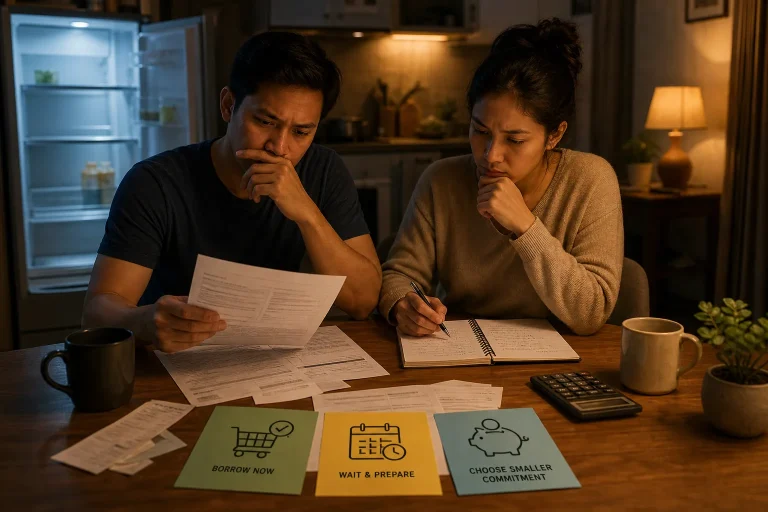
Questions to Ask Before Adding Credit to a Household Plan
Compare three ways to handle a household credit decision: borrow now, wait and prepare, or choose…

Why a Credit Check May Ask You to Confirm Your Identity
An identity prompt can be a routine part of an application, but you should understand who…